DEC 24, 2016 – From Earlier in the Week- Jimmy Smith and More..

DEC 24, 2016 – What You Missed Earlier in the Week (Thanks to Me not Writing About It!)

So Wednesday my  granddaughter Zoe and I ran some errands. The trip included: Walmart, the library and Lowe’s. For the trip to the library was an album that ‘i picked up at the Princeton Record Exchange a while back. It is a compilation album of tracks from albums that Jimmy Smith recorded on the Milestone label, during his brief tenure with the label. The album is titled Milestone Profiles: Jimmy Smith.

Milestone Profiles: Jimmy Smith.

Jimmy Smith has always been a jazz favorite of mine. My first exposure to jimmy Smith’s dynamic organ playing was the album The Dynamic Duo, he recorded with Wes Montgomery. Eventually Jimmy Smith’s Greatest  Hits album  became a favorite in my music rotation. That album introduced me to Jimmy’s  hits like “The Champ” and “The Sermon” Through the years many Smith albums have been added to my music library!!

Here’s some information about the album from AllMusic…..

……the music on this volume in the Milestone Profiles series is compiled from albums Smith recorded between 1989 and 1993. Apparently Smith’s contract wasn’t exclusive, since there are many other titles of new music issued in Europe or Japan. There is one exception, though, and a fine one. Included in this nine-cut set is a version of “The Sermon” with Eddie Harris from 1981, taken from an album called All the Way Live. Apparently — and astonishingly — this was the only time the two ever played together, and it’s the best thing here despite some flaws in the actual recording. The rest is a collection of mild swingers, blues, and standards like “Midnight Special” with Stanley Turrentine from the Fourmost album in 1989 — Kenny Burrell and Grady Tate were the other players on the session. And there are three other cuts taken from either this date or the Fourmost Return disc that was also issued in 1990, recorded a day after the first. “C Jam Blues,” with Terry Evans playing guitar, is another high point here, from 1989’s Prime Time. The music throughout is certainly of high quality and would give a novice Smith listener a fine portrait of his mastery as an organist. Read More

I agree that the version of “C Jam Blues” that opens the album is great! I missed “The Sermon” on the CD   because the CD was skipping on that track! i guess I’ll have to clean the CD and hope that it works!!

A Side Trip to the Library

When we got to the library, my plan was to go in , drop off the two books that I finished and leave. Not! I came out with three books. They will all be due back to the library near the middle of January. So maybe they will give me a good start on my reading for 2017.

Two of the books are not like books I typically  read. The first book is Everyone Brave is Forgiven by Chris Cleave….From Goodreads

From the author of the #1 New York Times bestselling Little Bee, a spellbinding novel about three unforgettable individuals thrown together by war, love, and their search for belonging in the ever-changing landscape of WWII London…..

Reading the praise on the back of the book I was intrigued…..

“Cleave has the extremely rare power of making you smile with lively language and clever observations while thoroughly, irreparably breaking your heart  – New York Newsday

“Cleave kick-starts his stories from the first breath and never takes his feet off the pedals” – Washington Post

“Inspirational and moving… Cleave is acutely intelligent wordsmith. Some of the sentences cut so deep you want to scream out in pain and recognition – The Time (UK)

Sounds good to me. Last year one of my Reading Challenges was to read more general fiction and/or literature. In addition I wanted to read award-winning books. Maybe a Pulitzer Prize or a Man Booker Prize. Both the above book and the following book fit in that Challenge,. The next book was All That Man Is by David Szalay  All That Man Is was a finalist for the Man Booker Prize.

Again from the back cover of the book…

“Each story (there are nine in the book) is a beautifully crystallized vision  of what it is for a man to be a particular age: insecurities about body and money, the wait for life to feel like it’s really got going; the sudden realization that this is all there is…. It’s hard to imagine reading a better book this year” – The Times

Overall both of these books seem like winners. I hope they live up to their billing!

The final book is a mystery,  Stone Coffin by Swedish author Kjell Eriksson. I enjoyed reading one of Eriksson’s previous books The Princess of Burundi. So I am looking forward to this one.

Ok so it’s almost 11:30 on Christmas Eve and my day began at 4:45 this morning so my brain is fried…..See you tomorrow hope you have a Merry Christmas!


t


Exploring the Jazz of Milt Buckner and Jo Jones! Hammond B3 and Drums, All Right!

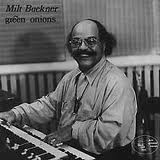
Among the jazz musicians birthdays yesterday was Hammond B3 organist and pianist Milt Buckner. Buckner was an influential musician on both instruments. He started out playing piano in Detroit in the 1930s.

By 1941 he had joined Lionel Hampton’s band and over the next 7 years he worked with the band as its pianist and staff arranger. Milt’s love of rocking rhythms and boogie-woogie messed nicely with Hampton;s style!.During this period, Buckner developed a uniquely percussive technique employing parallel tonal patterns, later referred to as “block chords.” Buckner’s locked hand technique would later be used by such greats as Red Garland, George Shearing, Bill Evans, and Oscar Peterson.

Throughout the 50s and into the sixties Buckner recorded ten albums as a leader. He spent the last eleven years of his life, which ended in 1977 at the age of 62, in Europe. His final album, Green Onions, was released in 1965, and the title track was the song I was going to use when I wrote about Milt. Any time I get to listen to Green Onions is a good time! However, this morning as I was searching through videos to play I came across this one, George Benson, Jo Jones, Milt Buckner, Jimmy Slyde in “L’Aventure du Jazz” As I was watching this video I was in all of drummer Jo Jones, whose name I didn’t recognize. My thoughts immediately went to Philly Joe Jones, who, according to Wikipedia Jo was confused with in his later years. The two drummers actually died only days apart. Anyway, I quickly went to Wikipedia to find out more about Jo…

Jo was a band leader and anchored th rhythm section for Count Basie’s Orchestra from 1934 to 1948.More about Jo from Wikipedia….

He was one of the first drummers to promote the use of brushes on drums and shifting the role of timekeeping from the bass drum to the hi-hat cymbal. Jones had a major influence on later drummers such as Buddy Rich, Kenny Clarke, Roy Haynes, Max Roach, and Louie Bellson. He also starred in several films, most notably the musical short Jammin’ the Blues (1944).
Jones performed regularly in later years at the West End jazz club at 116th and Broadway in New York City. These performances were generally very well attended by other drummers such as Max Roach and Roy Haynes. In addition to his artistry on the drums, Jones was known for his irascible, combative temperament.
In contrast to drummer Gene Krupa’s loud, insistent pounding of the bass drum on each beat, Jones often omitted bass drum playing altogether. Jones also continued a ride rhythm on hi-hat while it was continuously opening and closing instead of the common practice of striking it while it was closed. Jones’s style influenced the modern jazz drummer’s tendency to play timekeeping rhythms on a suspended cymbal that is now known as the ride cymbal
Read More

So now I have two more jazz pioneers whose work I need to explore…. so while I head over to Spotify to check out Jo Jones and Milt Buckner…. you can watch another video of the two, well, primarily the amazing Mr. Jones!!

2014 Jazz Organ – from Jared Gold – JG3+3 = a great jazz sextet and album!

JG 3+3Somewhere a while back I became aware of jazz organist Jared Gold. I think I first saw Jared’s name when I was searching for Dave Stryker’s album 8-Track (which I still have not found). Anyway, over the last couple of months, I’ve watched Gold’s latest release JG3+3 climb the JazzWeek Charts and have gone to Spotify to check the album out and come away empty. This week I did the same thing and this time the album was available and it has been in my jazz rotation this week and I have a new jazz organist favorite to add to my  ever-growing collection.

Gold has released seven albums as a leader on the Posi-Tone label that for the most feature guitar, organ and drum, the traditional organ trio. On JG3+3 Jared has expanded the trio to include three horns. The resulting sextet, in addition to usual trio members Dave Stryker on guitar ans Sylvia Cuenca on drums features: Patrick Cornelius on alto saxophone, Tatum Green Greenblatt on trumpet and Jason Marshall in Baritone sax. Needless to say the expanded line-up works to perfection. The group rips through the nine tracks on the album in a brisk and quickly moving 48 minutes that leaves you wanting to hear more!! The tracks on the album include some new arrangements of some well-known tunes by the likes of Cannonball Adderley, Wayne Shorter, and Dave Stryker as well as some original compositions.

So  let;s see I’ve got 6 or so other Jared Gold releases to check out. In addition I can check out Jared on  The Chaser from Jared Goldthe Dave Stryker Trio, because Jared is a part of Dave’s trio. Jared has also produced two albums with guitarist  Randy Napoleon and drummer Quincy Davis, Makin’ it and Plan  with the Oliver Lake group, Going Somewhere with the Avi Rothbard Trio Broadway Alley with the William Ash Trio, and Springloaded  with the Dan Pratt Organ Quartet. Edward, looks like “You have some esplorin’ to do!”!

Writing about Jared’ album Golden Child at All About Jazz – Mark Turner writes….

 Jazz organist Jared Gold continues to make his presence known, both in name and sonically. Energizing and free yet possessed of a comprehensive knowledge of the Hammond B3 organ, he communicates with the language of giants such as Don Patterson and Chris Foreman of the Deep Blue Organ Trio. It’s been said that “either you have it or you don’t,” and Gold’s playing bears the truth of the groove on Golden Child.

And Dan Bilawskywrites again at All About Jazz about All Wrapped Up….

When All Wrapped Up reaches its conclusion, two things are abundantly clear: this newfound quartet format hasn’t dampened or diminished the creative enthusiasm shown on Gold’s earlier releases; and the album continues the steady evolution of one of jazz’s most prominent rising star organists.

You can read the complete reviews here

Need I tell you – Check Him out – while I’m checking out all those albums I mentioned a while back!!

So let’s go into the morning with a video that showcases Jared Gold, with the added bonus of Tom Tallitsch on Tenor, Matt Davis – Guitar and David Ashkenazy – Drums

Links
JaredGoldB3
Posi-Tone Records
Wikipedia

Re-Exploring Jimmy Smith – Jimmy Smith’s Greatest Hits! (video)

By the time I became familiar with the music of Jimmy Smith in 1969, Jimmy had already recorded thirty-one (31) albums on the Blue Note label and an addition 25 albums on Verve! So I started with a Greatest Hits Album that covered the Blue Note years. Jimmy Smith Greatest Hits The condition of the album cover may give you an idea of how much the album has been used over the years! Anyway the other day I was sifting through my vinyl albums, saw it, cranked up the turntable and gave it a listen. I picked out the side 4 of the second side of the disk to of the album. Actually. that side of the album was not in too bad of shape!!Anyway I gave it a listen and the trumpet on the second track caught my attention the track title was “Flamingo” and the trumpet player was Lee Morgan!! Damn! I knew him way back when!! Then I started to look at the rest of the two-disk album and I found out that I knew several of the musicians that I’ve written about lately, way back then!! Here’s a table……

Track Title Artists
Side 1-1 All Day Long Lou Donaldson – alto saxophone

Kenny Burrell – guitar

Art Blakey – drums

Side 1-2 The Champ Thornell Schwartz – guitar

Donald Baily – drums

Side 2-1 The Sermon Lee Morgan – trumpet

Lou Donaldson – alto saxophone

Kenny Burrell – guitar

Tina Brooks – tenor saxophone

Art Blakey – drums

Side 3-1 Midnight Special Stanley Turentine – tenor saxophone

Kenny Burrell – guitar

Donald Baily – drums

Side 3-2 When Johnny Comes Marching Home Quentin Warren – guitar

Art Blakey – drums

Side 4-1 Can Heat Lou Donaldson – alto saxophone

Quentin Warren – guitar

Art Blakey – drums

Side 4-2 Flamingo Lee Morgan – trumpet

Kenny Burrell – guitar

Art Blakey – drums

Side 4-3 Prayer Meetin’ Stanley Turentine – tenor saxophone

Quentin Warren – guitar

Donald Bailey – drums

Of course Jimmy Smith appears on all of the above tracks! Conspicuously, absent are any bass players, Jimmy Smith’s pedal bass lines take over those functions!! I also have provided links to articles I have written about a few of the players!! Bottom line the album has been played a lot over the years, the list of musicians has not been read for MANY years so I forgot I knew a lot of these guys way back when, if you get a chance check out some of the tracks on the original Blue Note recordings, I know I am!! And I need to check out Quentin Warren’s guitar some more!! Here’s a 1964 of Jimmy Smith performing a portion of “The Sermon”   BBC TV Jimmy Smith – Hammond Organ; Quentin Warren – guitar; Billy Hart – drums

This Day in Music – May 24, 1941 – Jazz Organist Charles Earland was born in Philly!!

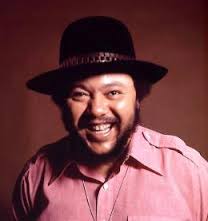
Chalres EarlandI browse the daily listing of jazz birthdays each day not only for whose birthday it is that particular day, but also to discover new music. Many times I select who I read about by the instrument they play. Other times I select someone with a foreign sounding name, figuring that will lead me to explorations of jazz music beyond America’s shores. Tunisian born Wajdi Cherif is a perfect example of this type of choice. I read about, and spent time listening to Charles Earland’s music this morning, based on the instrument he plays – Hammond B3 organ!!

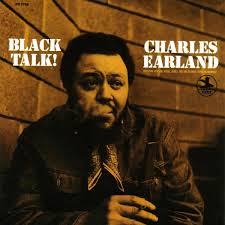
Charles Earland was born in Philadelphia on May 24, 1941. He began his jazz journey playing saxophone and played baritone sax, while in high school in a band that featured fellow Philadelphians Pat Martino on guitar, Lew Tabackinon tenor, and future teen idol, Frankie Avalon on trumpet!  After  playing in the Temple  University band Earland toured with Jimmy McGriff for three years. It was after he was let go by McGriff that Earland switched to playing the organ and formed an organ trio that featured Pat Martino on guitar and drummer Bobby Durham. He released his first Black Talkalbums for Choice in 1966. In 1968 and 69 Earland was a member of Lou Donaldson‘s band, after which he signed with Prestige as a solo artist. His first release for Prestige was Black Talk and that was the album that I listened to, and loved, this morning. The tracks on the album were effective jazz  covers of hits of the time. Scott Yanow at AllMusic writes this about the album….

This CD reissue of a Prestige date is one of the few successful examples of jazz musicians from the late ’60s taking a few rock and pop songs and turning them into creative jazz. Organist Charles Earland and his sextet, which includes trumpeter Virgil Jones, Houston Person, on tenor and guitarist Melvin Sparks, perform a variation of “Eleanor Rigby” titled “Black Talk,” two originals, a surprisingly effective rendition of “Aquarius,” and a classic rendition of “More Today Than Yesterday.” Fans of organ combos are advised to pick up this interesting set. AllMusic

After listening to the album, I heartily agree!! Earland went on to record eight more albums for Prestige, one of them featuring  young then unknown Grover Washington Jr.  He then  switched to Muse, followed by a switch Mercury and Columbia. By the mid-70s, as the audience for organ trio music was dwindling, Earland teamed  with  his wife singer/songwriter Sheryl Kendrick to produce a series of pop/disco albums.  His wife’s death from sickle-cell anemia in 1985, left him despondent and it was  several years before he shed his grief and brought himself and his Hammond B3 back to his roots, recording two soul-jazz albums on Millstone and then several on the Muse label before his untimely death from heart failure after a gig in Kansas City in 1999. He was only 58 years old!!.

Richard S. Ginell at All Music writes this about Earland’s organ styling….

….Earland came armed with his own swinging, technically agile, light-textured sound on the keyboard and one of the best walking-bass pedal techniques in the business. Though not an innovative player in his field, Earland burned with the best of them when he was on. Read More

So Happy Birthday to Charles Earland and let’s listen and watch Charles and George Duke perform “When Johnny comes Marching Home” ….while this song isn’t from Black Talk I thought it was great to hear Charles and watch him perform!!

Enhanced by Zemanta

This Day in Music – Jazz Organist – Jimmy McGriff was born!!

Jiimmy McGriff  born on April 3,1936 in the Germantown section of Philadelphia!


On this date April 3rd in 1936 James Harrell McGriff was born in the Germantown section of Philadelphia.His musical journey started at the age of five when he started to learn to play the piano. By the time he reached his teen years he had expanded the group of instruments that he could play to include:  vibesalto saxdrums and upright bass. Growing up Jimmy Smith was a childhood friend. After a stint as an Army MP during the Korean War, McGriff returned to Philly and became a police officer. During that time his thoughts kept drifting towards music. By this time Jimmy Smith’s career was growing, after hearing Richard “Grove” Holmes’ organ playing at McGriff’s sister’s wedding McGriff was determined to learn to play the organ. Eventually Holmes became his teacher. In 1956 he bought his first Hammond B3 and spent six months learning to play, He ultimately studied at Julliard in New York City and privately with others including his friend Jimmy Smith! You can read his complete biography here at Wikipedia.

Steve Huey in his biography of McGriff ar AllMusic writes:

One of the all-time giants of the Hammond B-3, Jimmy McGriff sometimes gets lost amid all the great soul-jazz organists from his hometown of Philadelphia. He was almost certainly the bluesiest of the major soul-jazz pioneers, and indeed, he often insisted that he was more of a blues musician than a jazz artist; nonetheless, he remained eclectic enough to blur the lines of classification. His sound — deep, down-to-earth grooves drenched in blues and gospel feeling — made him quite popular with R&B audiences, even more so than some of his peers; what was more, he was able to condense those charms into concise, funky, jukebox-ready singles that often did surprisingly well on the R&B charts. His rearrangement ofRay Charles‘ “I Got a Woman” was a Top Five R&B hit in 1962, and further hits like “All About My Girl,” “Kiko,” and “The Worm” followed over the course of the ’60s. Continue Reading

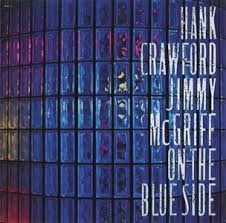
It makes me feel a little better that Huey says that Jimmy McGriff gets lost among the great-soul-jazz-organists Jimmy McGriiff-  Hank CRawford - On The Bluesidefrom Philly, because I only discovered his music a little while ago!! Everything I’ve listened to though so far I have enjoyed. This morning in honor of his birthday I listened to his 1990 release On the Blue Side, on this album McGriff is co-leader with saxophonist Hank Crawford.Scott Yanow says this about the album…..

One of the most consistent and most soulful of all jazz altoists, Hank Crawford sounds at his best when he has strong melodies to wrap his tone around, and when he can dig into the blues. Both aspects are true during this quartet outing which he co-leads with organist Jimmy McGriff. Crawford sounds particularly strong on “Jumpin’ With Symphony Sid” and “Hank’s Groove” and even if “Any Day Now” is a bit of a misfire, the interplay between the altoist and the organist (helped out by guitarist Jimmy Ponder’s occasional solos and strong support from drummer Vince James) makes this an excellent soul jazz effort overall.

I have enjoyed Crawford’s sax before and his album Wildflower is in my library, but Jimmy Ponder is new to me but I enjoyed the playing of both of them on this album. This one certainly is going to have a place in my music library!!

The sad part of this piece is that jimmy is no longer with us to celebrate his birthday. McGriff, at the time of his passing in May of 2008 McGriff was a resident of Voorhees, NJ. He died of complications from Multiple Sclerosis

Anyway Happy Birthday Jimmy – and I hope you, Jimmy Smith and Hank Crawford are have a great jam session wherever you are!! Jimmy’s website has the tag line “The World’s Greatest Blues Organist” so let’s go with that – here’s Jimmy McGriff, along with Hank Crawford and Bob DeVos on guitar and “Everyday I have the Blues”

Links
Artist Website
Wikipedia
AllMusic
Amazon

On this Date in Music – December 8, 1928 – Organist Jimmy Smith was born!!


Jimmy Smith


On this date in 1928 the master of the Hammond B3, Jimmy Smith was born. I have been listening to Jimmy Smith’s music since he late 60s when I discovered Wes Montgomery and then Jimmy & Wes an album by the two masters that they released in 1966. I love to put on a Jimmy Smith album at work and well just let it flow!! So let’s have some morning music to start our Sunday and to honor Jimmy on his birthday. But first some background….. from AllMusic

Jimmy Smith wasn’t the first organ player in jazz, but no one had a greater influence with the instrument than he did;Smith coaxed a rich, grooving tone from the Hammond B-3, and his sound and style made him a top instrumentalist in the 1950s and ’60s, while a number of rock and R&B keyboardists would learn valuable lessons from Smith’s example.


James Oscar Smith was born in Norristown, Pennsylvania on December 8, 1928 (some sources cite his birth year as 1925). Smith’s father was a musician and entertainer, and young Jimmy joined his song-and-dance act when he was six years old. By the time he was 12, Smith was an accomplished stride piano player who won local talent contests, but when his father began having problems with his knee and gave up performing to work as a plasterer, Jimmy quit school after eighth grade and began working odd jobs to help support the family. At 15, Smith joined the Navy, and when he returned home, he attended music school on the GI Bill, studying at the Hamilton School of Music and the Ornstein School, both based in Philadelphia. Continue Reading for complete biography

and from Wikipedia:

While the electric organ had been used in jazz by Fats Waller, Count Basie, Wild Bill Davis and others, Smith’s virtuoso improvisationtechnique on the Hammond helped to popularize the electric organ as a jazz and blues instrument. The B3 and companion Leslie speaker produce a distinctive sound, including percussive “clicks” with each key stroke. Smith’s style on fast tempo pieces combined bluesy “licks” with bebop-based single note runs. For ballads, he played walking bass lines on the bass pedals. For uptempo tunes, he would play the bass line on the lower manual and use the pedals for emphasis on the attack of certain notes, which helped to emulate the attack and sound of a string bass.


Smith influenced a constellation of jazz organists, including Jimmy McGriff, Brother Jack McDuff, Richard “Groove” Holmes, Joey DeFrancesco and Larry Goldings, as well as rock keyboardists such as Jon Lord, Brian Auger and Keith Emerson. More recently, Smith influenced bands such as the Beastie Boys, who sampled the bassline from “Root Down (and Get It)” from Root Down—and saluted Smith in the lyrics—for their own hit “Root Down,” Medeski, Martin & Wood, and the Hayden-Eckert Ensemble. Often called the father ofacid jazz, Smith lived to see that movement come to reflect Smith’s organ style. In the 1990s, Smith went to Nashville, taking a break from his ongoing gigs at his Sacramento restaurant which he owned and, in Music City, Nashville, he produced, with the help of a webmaster, Dot Com Blues, his last Verve album. In 1999, Smith guested on two tracks of a live album, Incredible!, the hit from the 1960s, with his protégé, Joey DeFrancesco, a then 28-year-old organist. Smith and DeFrancesco’s collaborative album Legacy was released in 2005 shortly after Smith’s death. Read More

and now the sad part of the story…..

….. In 2004, Smith was honored as a Jazz Master by the National Endowment for the Arts; that same year, Smith relocated from Los Angeles to Scottsdale, Arizona. Several months after settling in Scottsdale, Smith’s wife succumbed to cancer, and while he continued to perform and record, Jimmy Smith was found dead in his home less than a year later, on February 8, 2005. His final album, Legacy, was released several months after his passing.

FourmostAs I look down Jimmy’s vast discography at AllMusic among my favorites is his 1991 release Fourmost, a reunion album with his 30 plus-year associates tenor saxophonist Stanley Turrentine and guitarist Kenny Burrell along with drummer Grady Tate.

So let’s say Happy Birthday and Thanks to Jimmy Smith with a 1993 performance of “Organ Grinders Swing” with  Jimmy Smith playing with mates; Kenny Burrell on guitar;  Grady Tate on drums and Herman Riley playing the part of Stanley Turrentine on tenor sax!